Brain Tumour Awareness Month 2026
March is Brain Tumour Awareness Month, a vital time to raise awareness of the signs of a brain tumour and the urgent need for better treatments. As a leading brain tumour charity, Children with Cancer UK funds innovative brain tumour research to improve survival rates and quality of life for young patients. This Brain Tumour Awareness Month, show your support and help drive life-saving research forward.

Join us in supporting Brain Tumour Awareness Month
Brain and other central nervous system tumours are by far the greatest cancer-related cause of death in children in the UK. We are working with dedicated researchers and clinicians to change that, using research to improve lives.
On average, every month over 30 children* (the size of a classroom in the UK), are diagnosed with a brain tumour, which will have a life-changing impact on them and their family.
Just over half of the children who do survive will have neurological disabilities for the rest of their lives, because surgery and treatments, such as chemotherapy, lack specificity and therefore can destroy healthy cells leading to permanently damaging side effects.
But there is hope with your help.
In March, we’re recognising Brain Tumour Awareness Month, highlighting important advances in brain tumour research.
That’s why our research includes projects focused on targeted treatment options tailored to each child’s specific cancer.
*Statistic calculated based on figures provided by Cancer Research UK.
What are brain tumours?
Learn more about the types of cancers that brain and central nervous system tumours are, from Dr Mohammed Abbas Khaki, GP and Children with Cancer UK Ambassador.
Life-saving brain tumour research
Learn about vital brain tumour research funded by Children with Cancer UK, made possible by the generosity of our supporters.
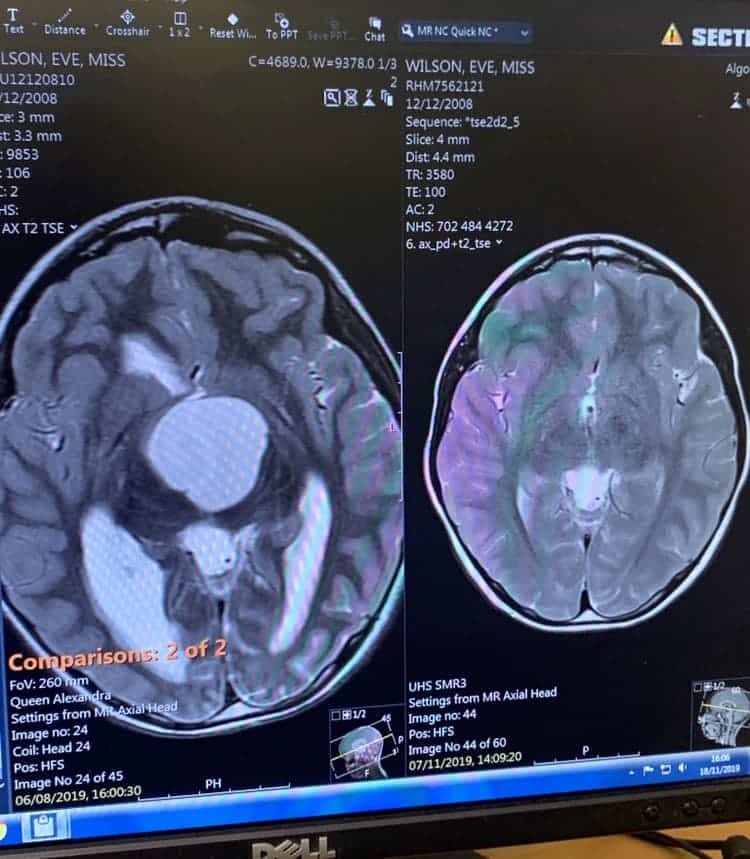
Looking for early signs on brain MRIs that can predict whether young people with ependymoma will go on to experience cognitive problems
Dr Shivaram Avula is working to identify markers in the brains of young people with brain tumours that will help predict the development of long-term side effects like learning and memory problems.

Tracking the spread of metastatic medulloblastoma to identify key drivers of disease progression and therapeutic vulnerabilities
Dr Laura Donovan’s research addresses a critical gap in our understanding of how medulloblastoma, a fast-growing and often aggressive brain cancer that primarily affects children, spreads to other parts of the brain and spine (a process called metastasis).

Read real-life stories from brain tumour patients

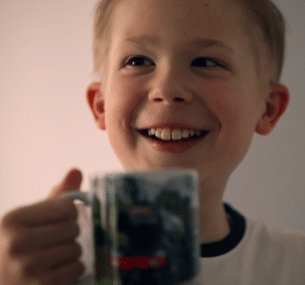
Alfie’s story
Alfie was diagnosed with medulloblastoma, a type of brain tumour, in September 2019, at the age of nine. Some months before Alfie’s diagnosis, he had been suffering with headaches, sometimes accompanied with vomiting. Alfie was always a sociable and popular boy at school, but his parents noticed he had become withdrawn from his peers.
Alfie was also diagnosed with posterior fossa syndrome following the surgery to remove his tumour, and had to learn to walk and talk again. In October 2020, Alfie rang the end of treatment bell and, in December 2025, he celebrated his 16th birthday and reached his 5-year scans since completing his treatment.
Alfie is an inspiration to us all and we are so proud of him.
Leighton’s story
Leighton was diagnosed with medulloblastoma, a type of brain tumour on 12 February 2019 when he was just six years old.
In October 2019, he had his final round of chemotherapy and was officially ‘cancer free’ in September 2024. However, Leighton had to learn to walk and talk again and still had weakness to his left side along with processing issues due to acquired brain injury through the surgery.
He also requires daily injections for his growth hormones, thyroid medication as the radiation affected the pituitary glands along with medication for his adrenal glands.
Get involved this Brain Tumour Awareness Month
Get involved this March to spread awareness of brain tumours in children and young people, and the urgent need for more research.

Fundraiser of the Month: Shyanne
Fundraiser of the Month: Shyanne Our Fundraiser of the Month for July 2026 goes to the incredible Shyanne, who has…
Read more Fundraiser of the Month: Shyanne
A week before Daniel’s 3rd birthday, they found a tumour
Daniel was diagnosed with Burkitt’s lymphoma – and a tumour in his stomach area, a week before his 3rd birthday.
Read more A week before Daniel’s 3rd birthday, they found a tumour
Fundraiser of the Month: Steve and Chris
Fundraiser of the Month: Steve and Chris Our Fundraiser of the Month for June 2026 goes to the incredible Steve…
Read more Fundraiser of the Month: Steve and Chris
Tia’s Acute Lymphoblastic Leukaemia Story
Tia’s Acute Lymphoblastic Leukaemia Story “Adult cancer drugs are too big for children. We must find childhood cancer treatments that…
Read more Tia’s Acute Lymphoblastic Leukaemia Story
Kaiden’s Medulloblastoma Story
Kaiden’s Medulloblastoma Story “I have huge hopes that one day in the future, children like Kaiden can have much kinder…
Read more Kaiden’s Medulloblastoma Story
Too Big Campaign – Press Release
‘2 BIG’: OVERSIZED EVERTON KIT HIGHLIGHTS HARSH REALITY OF CHILDREN RECEIVING ADULT CANCER TREATMENT 11-year-old Kaiden Edwards, who is living…
Read more Too Big Campaign – Press Release
Fundraiser of the Month: Izzy
Fundraiser of the Month: Izzy Our Fundraiser of the Month for April 2026 goes to the amazing Izzy, who set…
Read more Fundraiser of the Month: Izzy
Teenage and Young Adult Cancer Awareness Month 2026
Childhood cancer survivor shares his story for Teenage and Young Adult Cancer Awareness Month after completing a marathon and inspiring others to follow.
Read more Teenage and Young Adult Cancer Awareness Month 2026
Alfie’s Glioblastoma Story
Alfie’s Glioblastoma Story Alfie was only 3 months old when his dad noticed something wasn’t right. Read his full story…
Read more Alfie’s Glioblastoma Story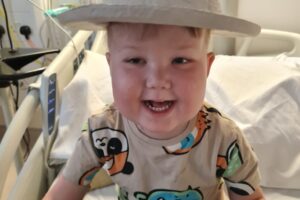
Teddy’s Leukaemia Story
Teddy’s Leukaemia Story Teddy was only 3 when he was diagnosed with Leukaemia. His father, Sam is sharing Teddy’s story…
Read more Teddy’s Leukaemia Story